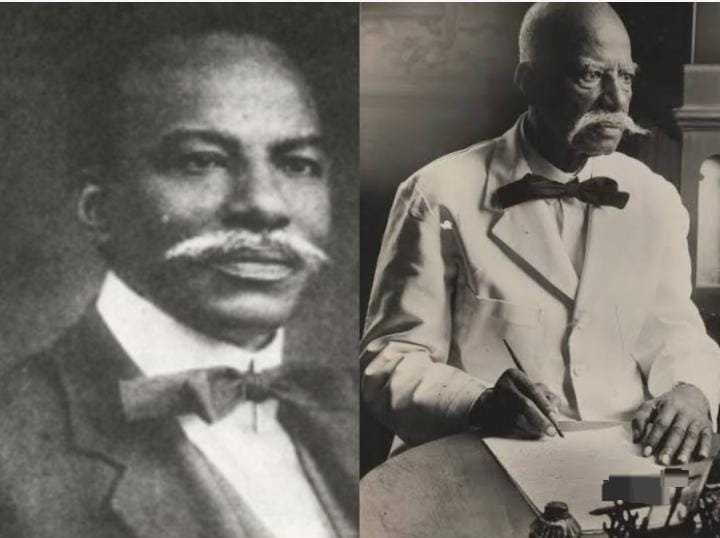
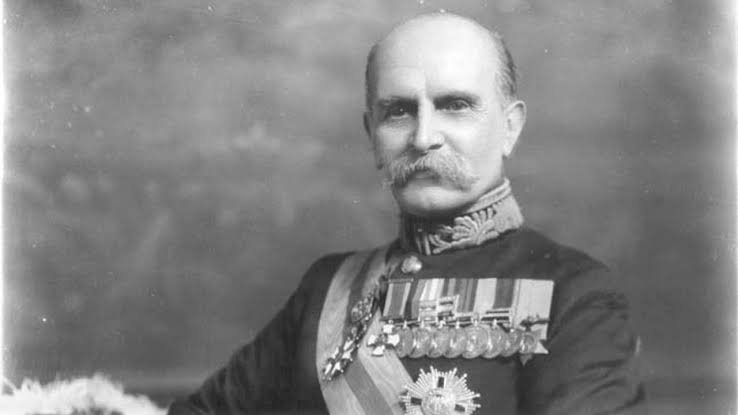
Herbert Samuel Macaulay occupies a special place in Nigeria’s political history. Long before Nigeria achieved independence in 1960, Macaulay emerged as one of the strongest African voices challenging British colonial rule. A civil engineer, surveyor, journalist, political activist and community leader, he devoted much of his life to defending African rights and demanding greater participation in the affairs of the country.
Often described as Nigeria’s first nationalist, Macaulay helped lay the foundation for the nationalist movement that later produced leaders such as Nnamdi Azikiwe, Obafemi Awolowo and Ahmadu Bello. His political career began at a time when colonial authority was firmly established and open opposition to British policies could carry serious consequences.
Early Life and Background
Herbert Samuel Macaulay was born on November 14, 1864, in Lagos, which was then a British colony. He came from a prominent Christian family.
His father, Thomas Babington Macaulay, was an educator and one of the founders of the first secondary school in Lagos, while his mother, Abigail Crowther, was the daughter of Samuel Ajayi Crowther, the renowned Yoruba clergyman who became the first African Anglican bishop.
Growing up in an educated Christian environment exposed Macaulay to both African society and the institutions introduced by British colonial rule.
He received his early education in Lagos before travelling to England to study civil engineering and surveying. After completing his studies, he returned to Lagos and entered the colonial civil service.
From Colonial Servant to Critic of Colonial Rule
Macaulay initially worked for the British colonial administration as a surveyor. His professional career gave him firsthand knowledge of how colonial government operated.
However, his relationship with the colonial administration eventually became strained.
One of the issues that shaped his political outlook was the treatment of African landowners and the wider question of colonial control over land. Macaulay became increasingly critical of policies that he believed disadvantaged Nigerians and weakened their rights.
His disagreements with colonial authorities eventually contributed to his departure from government service.
Rather than ending his public career, leaving the colonial service pushed Macaulay further into politics and public advocacy.
The Birth of Nigerian Nationalism
At the beginning of the twentieth century, political opposition to British rule in Nigeria was still relatively limited. There were educated Africans who criticized specific colonial policies, but there was not yet a strong nationwide nationalist movement.
Macaulay became one of the earliest Nigerians to organize political opposition to colonial policies.
He used newspapers, public meetings, petitions and political organizations to express his views. His activities helped introduce a more organized form of political nationalism in Lagos.
Macaulay’s political arguments were often focused on issues such as land rights, taxation, traditional institutions and the treatment of Africans by colonial officials.
Although his political movement was initially concentrated in Lagos, his influence gradually extended beyond the city.
The Lagos Auxiliary of the People’s Union
In 1908, Macaulay became associated with the Lagos Auxiliary of the People’s Union, an organization established to oppose unpopular colonial policies, particularly taxation.
The organization became an important platform for political activism in Lagos.
Macaulay understood the power of public opinion. Instead of relying only on private negotiations with colonial officials, he mobilized ordinary people through meetings and public campaigns.
His approach helped demonstrate that Nigerians could organize collectively to challenge government policies.
The Lagos Railway Land Dispute
One of the major episodes that strengthened Macaulay’s reputation as a nationalist involved a land dispute connected to the colonial government and the Lagos railway.
Macaulay argued that the government had treated African landowners unfairly in matters involving compensation and land acquisition.
The controversy attracted considerable public attention and strengthened his image as a defender of Nigerian interests.
His willingness to confront colonial authorities made him increasingly popular among sections of the Lagos population, while also making him a controversial figure in colonial political circles.
Journalism and Political Influence
Macaulay understood that political activism required an effective way to communicate with the public.
He became involved in journalism and used newspapers to criticize colonial policies and promote political awareness.
His writings helped create a political culture in which Nigerians could openly discuss colonial administration, rights and representation.
Macaulay was particularly influential in Lagos, where an educated African middle class was beginning to develop. His political campaigns connected educated elites with wider public concerns.
Although his style could be confrontational, his activism helped establish the idea that colonial government should be held accountable to the people it governed.
Founding the Nigerian National Democratic Party
One of the most important moments in Macaulay’s political career came in 1923, when he helped establish the Nigerian National Democratic Party (NNDP).
The NNDP became one of Nigeria’s earliest organized political parties.
The creation of the party followed constitutional changes that introduced an elective principle into the colonial political system. The NNDP participated in elections and became a dominant political force in Lagos during the 1920s and early 1930s.
Under Macaulay’s leadership, the party won several elections and gained significant influence in Lagos politics.
The NNDP’s success demonstrated that organized Nigerian political movements could compete within the limited political institutions created by colonial rule.
Macaulay and the Nigerian Youth Movement
Macaulay’s political dominance in Lagos eventually faced competition from younger political activists.
The Nigerian Youth Movement (NYM) emerged in the 1930s and attracted a growing number of educated Nigerians.
Political disagreements between Macaulay’s supporters and members of the NYM reflected a changing Nigerian political environment. A younger generation wanted broader political participation and increasingly national rather than Lagos-centered politics.
Despite these challenges, Macaulay remained an important political figure.
The National Council of Nigeria and the Cameroons
During the 1940s, Macaulay’s political activities took a new direction.
In 1944, he worked with journalist and politician Nnamdi Azikiwe to establish the National Council of Nigeria and the Cameroons (NCNC).
The organization became an important nationalist platform.
Macaulay served as its first president, while Azikiwe became one of its most prominent leaders. Together, they campaigned for greater Nigerian political participation and constitutional reforms.
The NCNC also attempted to build political support beyond Lagos, reflecting the growing desire for a broader Nigerian nationalist movement.
His Final Political Campaign
Macaulay’s political career continued into the final years of his life.
In 1945, the NCNC became involved in opposition to colonial policies during a period of growing labour unrest and political activism. The general strike of that year highlighted widespread dissatisfaction with wages and economic conditions.
Macaulay and the NCNC supported demands for reforms and greater consideration of Nigerian interests.
He remained politically active despite his advancing age.
However, his career was approaching its end.
Death of Herbert Macaulay
Herbert Macaulay died on May 7, 1946, in Lagos at the age of 81.
His death came before Nigeria’s final transition to independence, which would occur fourteen years later in 1960.
Although he did not live to see an independent Nigeria, the political foundations he helped establish influenced the nationalist generation that followed.
Nnamdi Azikiwe and other political leaders continued the struggle through the NCNC and other nationalist organizations.
Macaulay’s importance in Nigerian history goes beyond the political positions he held.
He belonged to an early generation of Nigerians who openly questioned the assumption that colonial rule should continue indefinitely. At a time when political participation was severely restricted, he used petitions, newspapers, political organizations and elections to challenge colonial authority.
His methods were not identical to those of later nationalist leaders, and his political career had limitations. Much of his influence was concentrated in Lagos, and the political organizations associated with him faced internal divisions and competition.
Nevertheless, his contribution to the development of Nigerian nationalism remains significant.
He helped establish several ideas that became central to the independence movement: that Nigerians had political rights, that colonial policies should be challenged, and that Nigerians should have a greater role in governing their own country.
Herbert Macaulay died fourteen years before Nigeria became independent, but his political legacy survived.
The nationalist movement he helped develop would eventually grow into a much larger struggle involving leaders and organizations across the country.
His partnership with Nnamdi Azikiwe also connected the earlier generation of Lagos-based political activism with the broader nationalist movement of the 1940s.
Today, Macaulay is remembered as one of the pioneers of Nigerian nationalism and a foundational figure in the country’s political history.
His life tells the story of a Nigeria that was still under colonial rule but was beginning to demand a political voice of its own.
For that reason, Herbert Macaulay remains one of the most important figures in the long journey from colonial rule to Nigerian independence.
The Historabase Editorial Team is dedicated to exploring and sharing the stories that have shaped Africa and the wider world. Our work covers African history, ancient civilizations, empires, historical figures, wars, cultures, political movements, and important events from the past.
We aim to present history in a clear, engaging, and accessible way, combining historical records with careful research to help readers better understand the people, events, and civilizations that shaped our world.





One Comment