For thousands of years, humans could see only what the naked eye allowed them to see. The world of tiny organisms, cells and microscopic structures remained completely hidden.
That changed with the invention of the microscope.
The microscope did more than magnify objects. It opened an entirely new world to humanity and transformed science, medicine, biology and our understanding of life itself.
But who invented the microscope? The answer is more complicated than simply naming one person.
Who Invented the Microscope?
The invention of the first practical microscope is generally associated with Dutch spectacle makers Hans Janssen, Zacharias Janssen and their father, Hans Janssen, around the late 16th or early 17th century.
Historical accounts traditionally credit Zacharias Janssen with helping to create an early compound microscope around 1590, although historians still debate exactly who built the first microscope and when.
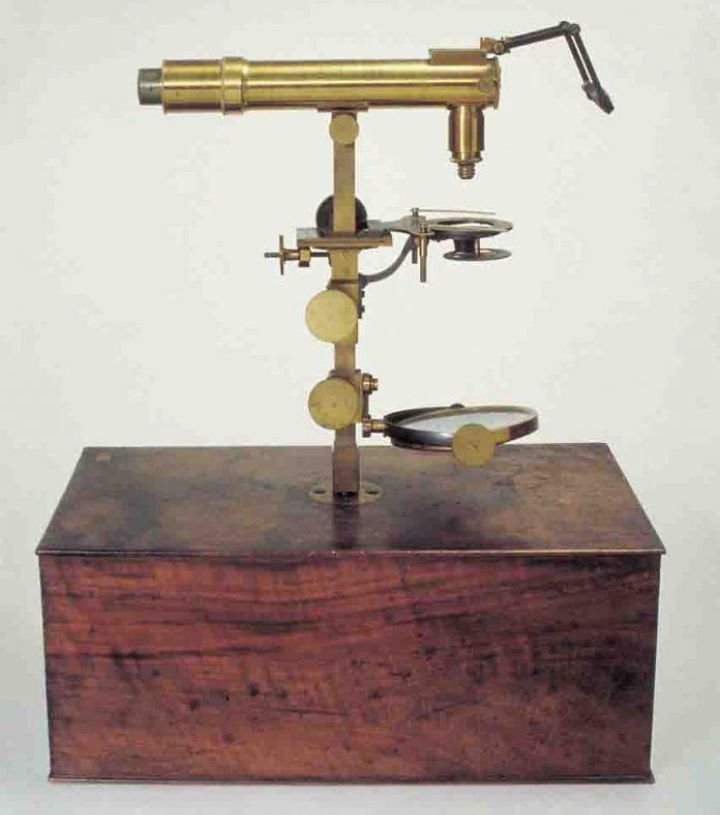
The early device was fundamentally different from the powerful microscopes scientists use today. It consisted of multiple lenses arranged in a tube, allowing objects to appear much larger than they were to the naked eye.
The Janssens were spectacle makers in the Netherlands, and their experience with lenses probably helped them experiment with combining lenses to achieve greater magnification.
However, there is no surviving original Janssen microscope that conclusively proves the traditional story. As a result, the invention is often described as a development involving several early lens makers rather than the achievement of one unquestionably identified inventor.
How Did the First Microscope Work?
The earliest compound microscopes used two or more lenses.
One lens acted as the objective, positioned close to the object being examined. Another lens served as the eyepiece, through which the observer looked.
When light passed through the lenses, the image was enlarged.
The basic principle was surprisingly simple, but producing good lenses was extremely difficult. Early microscopes suffered from blurry images, colour distortion and limited magnification.
Even so, they represented a remarkable technological breakthrough.
For the first time, people could investigate structures that had previously been completely invisible.
Galileo and the Early Development of Microscopy
The development of microscopy did not stop with the Janssens.
Italian scientist Galileo Galilei also experimented with magnifying instruments in the early 17th century. Around 1624, he developed an instrument sometimes called the occhiolino, or “little eye,” which could be used for examining small objects.
Galileo’s work demonstrated that microscopes were becoming scientific instruments rather than simply curiosities.
Other European scientists and instrument makers continued improving lenses and microscope designs.
The technology was gradually becoming more useful for serious scientific observation.
Robert Hooke and the Discovery of Cells
One of the most important moments in microscope history came in 1665, when English scientist Robert Hooke published Micrographia.
Hooke used an improved compound microscope to examine objects ranging from insects to plants.
While examining a thin slice of cork, he noticed a pattern of tiny compartments resembling the small rooms occupied by monks. He called these structures “cells.”
Hooke was not observing living cells in the modern sense. The cork cells he examined were largely dead structures.
Nevertheless, his observation introduced the word cell into biology.
His book became extremely influential and showed European audiences that microscopes could reveal an astonishing hidden world.
Antonie van Leeuwenhoek Sees the Invisible
If Hooke helped introduce the microscopic world to the public, Antonie van Leeuwenhoek took microscopy to an entirely new level.
Leeuwenhoek was a Dutch tradesman and scientist who became famous for making exceptionally powerful single-lens microscopes.
Unlike the compound microscopes of his time, Leeuwenhoek’s instruments used a tiny but highly polished lens.
His microscopes could achieve remarkably high magnification and, more importantly, produced images of much greater clarity than many contemporary instruments.
Using his microscopes, Leeuwenhoek observed things nobody had described before.
He examined water, blood, dental plaque and other materials and reported seeing tiny living organisms.
He called these creatures “animalcules.”
Scientists now recognize many of them as bacteria and protozoa.
Leeuwenhoek also observed red blood cells, sperm cells and other microscopic structures.
His discoveries fundamentally changed humanity’s understanding of life.
Why Was the Microscope So Important?
Before microscopy, scientists had no way to directly observe the microscopic organisms that surrounded them.
The microscope changed that.
It revealed that the natural world existed at scales far smaller than human vision could detect.
Scientists discovered that living organisms contained complex structures and that water, soil and even the human body contained microscopic life.
This eventually contributed to major developments in:
Biology
Medicine
Microbiology
Anatomy
Genetics
Cell biology
Disease research
The microscope therefore became one of the most important scientific instruments ever created.
How Microscopes Changed Medicine
The impact of microscopy on medicine was enormous.
As microscopes improved, scientists could examine tissues and identify structures within the human body that were impossible to see with the naked eye.
During the 19th century, improvements in microscopy contributed to the development of cell theory.
Scientists Matthias Schleiden and Theodor Schwann argued that plants and animals are made up of cells. Later, Rudolf Virchow famously advanced the idea that cells arise from pre-existing cells.
Microscopy also played a crucial role in the development of germ theory.
Scientists such as Louis Pasteur and Robert Koch used microscopic observations and experiments to investigate microorganisms and their connection to disease.
This helped transform medicine from a field based largely on traditional explanations into a modern scientific discipline.
From Simple Lenses to Electron Microscopes
Microscope technology continued evolving long after the first instruments were created.
By the 19th century, improved glass-making and optical techniques produced much clearer microscopes.
In the 20th century, scientists developed the electron microscope, which uses beams of electrons rather than visible light.
Electron microscopes can reveal structures far smaller than those visible through conventional optical microscopes.
Modern microscopy now includes powerful techniques such as fluorescence microscopy, confocal microscopy and electron microscopy.
Scientists can examine viruses, proteins, cellular structures and other incredibly small objects.
Who Really Invented the Microscope?
So, who deserves credit?
There is no completely certain answer.
The Janssens are traditionally credited with developing one of the earliest compound microscopes around 1590. However, historical evidence is incomplete, and other early lens makers may have contributed to the technology.
What is clear is that the microscope was not the product of one sudden invention.
It developed through the combined efforts of lens makers, scientists and instrument designers over many generations.
The Janssens helped establish the early concept. Galileo and others experimented with magnifying instruments. Robert Hooke demonstrated the scientific possibilities of microscopy, while Antonie van Leeuwenhoek made groundbreaking observations of microscopic life.
Together, these developments transformed microscopy into one of science’s most powerful tools.
The Invisible World Became Visible
The invention of the microscope changed humanity’s relationship with nature.
Before it, the smallest visible objects seemed to mark the limits of the natural world.
After it, scientists discovered an entire universe hidden beneath those limits.
A drop of water could contain thousands of organisms. A thin piece of plant material could reveal countless structures. The human body could be understood as a collection of microscopic units.
What began as an experiment with glass lenses eventually helped humanity discover cells, bacteria and an enormous hidden world of life.
The microscope reminds us that some of the greatest scientific discoveries do not require travelling into space or exploring distant continents.
Sometimes, an entirely new world is waiting just beyond what our eyes can see.
Frequently Asked Questions
Who invented the microscope?
The first compound microscope is traditionally credited to Zacharias Janssen and his father, Hans Janssen, Dutch spectacle makers, around 1590. However, the historical evidence is uncertain.
Who discovered cells with a microscope?
Robert Hooke observed the tiny compartments in cork in 1665 and called them “cells.”
Who first observed bacteria?
Antonie van Leeuwenhoek was among the first people to observe and describe bacteria and other microscopic organisms using his powerful handmade microscopes.
Why was the microscope important?
The microscope allowed scientists to observe structures and organisms invisible to the naked eye. It became fundamental to biology, medicine and microbiology.
When was the microscope invented?
The earliest compound microscopes appeared around the late 16th or early 17th century, with the Janssens traditionally associated with their development.
The Historabase Editorial Team is dedicated to exploring and sharing the stories that have shaped Africa and the wider world. Our work covers African history, ancient civilizations, empires, historical figures, wars, cultures, political movements, and important events from the past.
We aim to present history in a clear, engaging, and accessible way, combining historical records with careful research to help readers better understand the people, events, and civilizations that shaped our world.