On 20 October 2020, Nigeria witnessed one of the most controversial episodes in its recent history when soldiers opened fire on protesters gathered at the Lekki Toll Gate in Lagos during the #EndSARS movement. The incident, which resulted in reported deaths and injuries, attracted international attention and intensified demands for accountability over police brutality and the use of force against civilians.
The shooting became a defining moment of the protests, leaving lasting questions about the actions of security forces, the government’s response, and the pursuit of justice for victims.
The Origins of the #EndSARS Movement
The #EndSARS movement emerged from years of complaints about abuses attributed to the Special Anti-Robbery Squad (SARS), a unit of the Nigeria Police Force established to combat armed robbery and other serious crimes.
Over time, SARS officers faced widespread allegations of arbitrary arrests, extortion, torture, assault, and extrajudicial killings. Young Nigerians also reported being stopped and harassed because of their hairstyles, clothing, tattoos, and possession of expensive mobile phones.
Although the government had previously announced reforms to address complaints against the unit, public dissatisfaction continued.
In early October 2020, reports and videos alleging police misconduct circulated widely on social media, prompting renewed demonstrations. Young Nigerians organised protests in Lagos and other cities, demanding the dissolution of SARS and meaningful changes to policing.
The movement subsequently expanded beyond the police unit, reflecting broader frustration over unemployment, corruption, poor governance, and the treatment of citizens by security agencies.
The Five for Five Demands
As the protests spread, demonstrators presented five principal demands, commonly known as the Five for Five demands.
They called for the release of arrested protesters, justice and compensation for victims of police brutality, an independent mechanism to investigate police misconduct, psychological evaluation and retraining of officers before redeployment, and improved salaries for police personnel.
The demands sought to address both individual cases of abuse and institutional problems within Nigeria’s policing system.
On 11 October 2020, the federal government announced the dissolution of SARS. However, protesters continued their demonstrations, arguing that dissolving the unit alone would not guarantee accountability or prevent similar abuses by other police formations.
The Lekki Toll Gate in Lagos became one of the movement’s principal gathering points, attracting demonstrators who maintained a sustained presence at the location.
The Events of 20 October 2020
On 20 October, the Lagos State Government announced a curfew amid growing unrest and reports of violence in parts of the state. The curfew was initially scheduled to begin at 4 p.m. before the start time was revised to 9 p.m.
Despite the announcement, protesters remained at the Lekki Toll Gate during the evening.
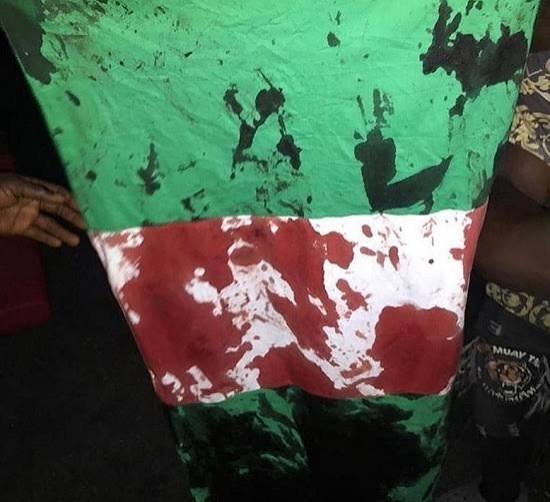
Witnesses reported that soldiers arrived at the location as demonstrators continued their gathering. Video recordings from the scene showed protesters holding Nigerian flags and singing the national anthem before and during the confrontation.
Reports from eyewitnesses and human rights organisations documented the use of live ammunition against protesters.
The gunfire caused panic as people attempted to escape. Some demonstrators sustained gunshot wounds, while reports of deaths began circulating that evening.
The incident quickly attracted national and international attention. Footage and accounts from the scene spread across social media, prompting widespread calls for an investigation into the conduct of the security forces.
The Nigerian Army acknowledged that its personnel had been deployed to the Lekki Toll Gate but disputed allegations that it had carried out the massacre described by protesters and human rights organisations.
The circumstances surrounding the deployment, the use of ammunition, and the orders given to personnel subsequently became central questions in investigations into the incident.
The Dispute Over Casualties
The number of people killed during the Lekki Toll Gate shooting became one of the most contested aspects of the incident.
On 21 October 2020, Amnesty International reported that at least 12 people had been killed by security forces at two locations in Lagos during the crackdown on protests the previous day. The organisation identified at least 10 deaths at the Lekki Toll Gate and two at the Alausa protest site.
Its findings were based on information gathered from witnesses, relatives, and other sources. Amnesty International called for an independent investigation and accountability for those responsible.
In November 2021, the Lagos State Judicial Panel of Inquiry submitted its report on the Lekki incident. The panel identified nine deaths associated with the incident, four people presumed dead, and several people injured.
The panel concluded that security personnel had used live ammunition against protesters and documented serious violations arising from the operation. Its report described the incident as a massacre in the context of its findings.
However, the Lagos State Government subsequently issued a white paper rejecting or disputing several of the panel’s conclusions. The Nigerian military also denied allegations that it had carried out the massacre described by protesters.
The different casualty figures and competing interpretations of the evidence became central to the continuing controversy. The findings of human rights organisations, the judicial panel’s conclusions, and the responses of government authorities remain important records for understanding the incident.
The shooting occurred amid a wider period of unrest across Nigeria.
During October 2020, demonstrations took place in several cities, including Abuja, Port Harcourt, Benin City, and Ibadan. While many protesters called for police reform, other locations experienced confrontations, attacks on public infrastructure, and violence involving protesters and security personnel.
In Lagos, reports of attacks on police facilities, public property, and other locations emerged during the unrest.
These developments complicated efforts to establish the full number of deaths and injuries associated with the protests. Casualties reported across Nigeria arose from different incidents and circumstances and should not all be attributed to the Lekki Toll Gate shooting.
The events nevertheless demonstrated how a movement initially focused on police brutality had developed into a wider national crisis over security, governance, and public confidence in state institutions.
Government Response and Subsequent Investigations
The shooting generated widespread condemnation and demands for an independent investigation.
On 22 October 2020, President Muhammadu Buhari addressed the nation, calling for calm and an end to the protests. He reiterated the government’s commitment to police reform. However, critics argued that the address did not adequately acknowledge the deaths alleged at the Lekki Toll Gate or directly address the concerns of affected protesters.
The Lagos State Government subsequently established a Judicial Panel of Inquiry to investigate allegations of police brutality and the Lekki incident.
The panel heard testimony from witnesses, examined evidence, and considered accounts from people who participated in the protests and security personnel.
Its final report, submitted in November 2021, documented deaths, injuries, and serious concerns about the conduct of security personnel. The report became the subject of further controversy after the state government published its white paper challenging several of the panel’s conclusions.
The disagreement over the report reinforced public concerns about accountability and the adequacy of the official response.
Although the investigations produced an important documentary record, disputes over the interpretation of the evidence and the consequences for those responsible continued to shape public debate.
The Lekki Toll Gate shooting attracted international scrutiny.
Amnesty International condemned the reported killings and called for an independent investigation. International news organisations examined eyewitness testimony, video recordings, and other available evidence concerning the events.
The incident also prompted renewed discussion about the right to peaceful assembly, the use of military force in civilian settings, and the responsibility of governments to protect demonstrators.
For many observers, the shooting illustrated the dangers faced by citizens who demand accountability from security institutions and raised questions about the effectiveness of existing safeguards against abuses of power.
The Historical Legacy of 20 October 2020
The events at the Lekki Toll Gate became a defining chapter in Nigeria’s contemporary history.
The #EndSARS movement demonstrated the ability of young Nigerians to organise large-scale demonstrations, coordinate through social media, and draw international attention to domestic human rights concerns.
It also exposed longstanding tensions between citizens and security institutions. Although the government had announced the dissolution of SARS before the shooting, the incident showed that public confidence could not be restored through announcements alone. Questions about accountability, police conduct, and institutional reform remained unresolved.
For many Nigerians, 20 October became a day of remembrance for those killed or injured during the protests. The date continues to be associated with demands for justice and a commitment to preventing similar abuses.
The shooting also left a significant documentary record through eyewitness accounts, video evidence, human rights investigations, and the Lagos State Judicial Panel of Inquiry. These sources remain essential to historical efforts to establish what happened and assess the responsibilities of the institutions involved.
Six years after the incident, the Lekki Toll Gate shooting remains a powerful symbol of the struggle for police accountability in Nigeria. Its significance extends beyond the events of one evening: it reflects the broader challenge of protecting fundamental rights, ensuring transparent investigations, and building public trust in government institutions.
The history of 20 October 2020 is therefore not only the story of a protest and a violent confrontation. It is also the story of a generation’s demand for justice and the continuing debate over how Nigeria should respond to allegations of abuse by those entrusted with enforcing the law.
The Historabase Editorial Team is dedicated to exploring and sharing the stories that have shaped Africa and the wider world. Our work covers African history, ancient civilizations, empires, historical figures, wars, cultures, political movements, and important events from the past.
We aim to present history in a clear, engaging, and accessible way, combining historical records with careful research to help readers better understand the people, events, and civilizations that shaped our world.